A free digital cultural institution
Discover the histories that shaped West Africa.
Explore kingdoms, communities, trade, scholarship, and living traditions through stories that connect the past with the present.
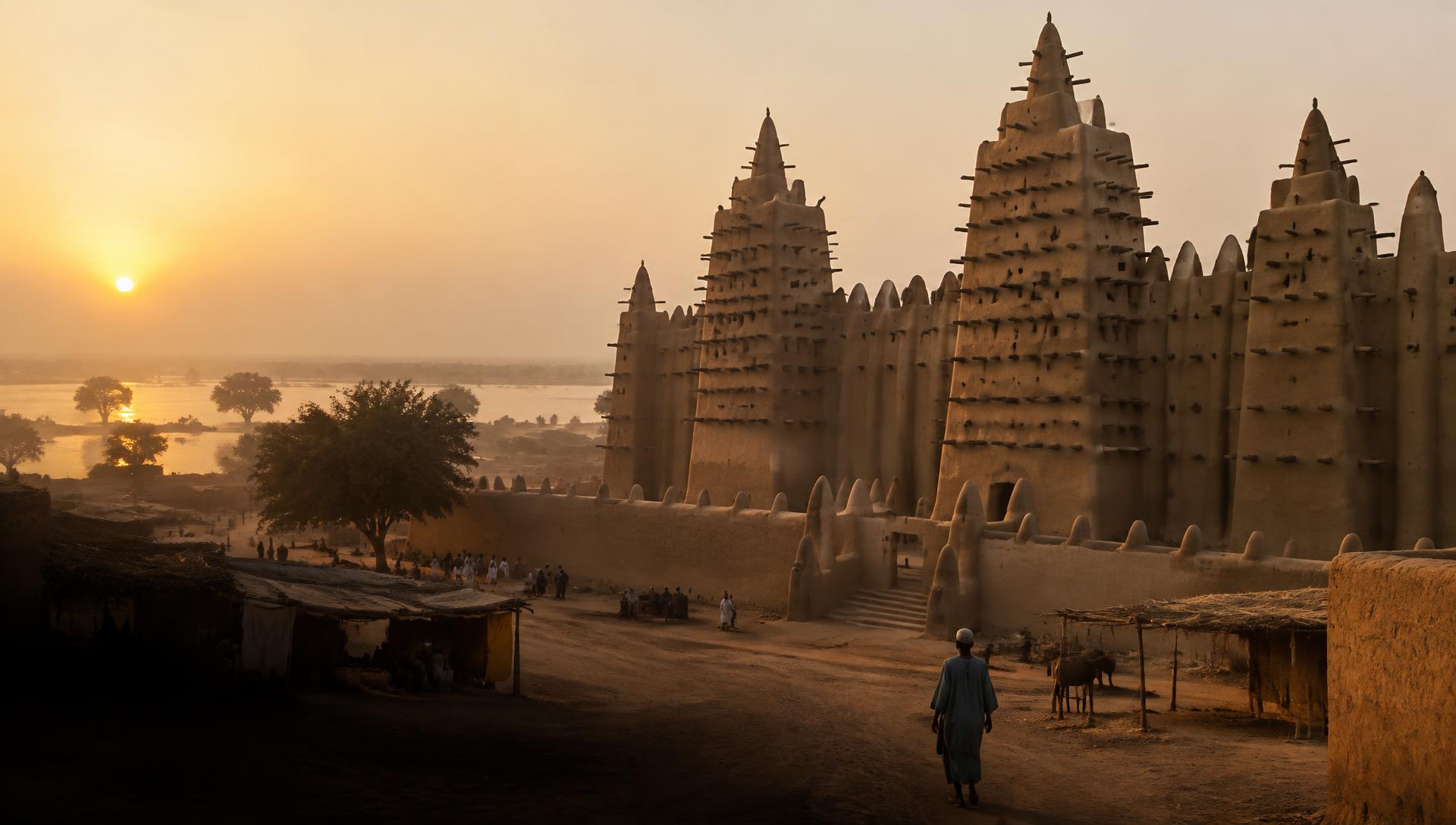
Image: Illustrative image created for Lorma with AI. Not a photograph of a specific place or an archival record. Inspired by Sahelian earthen architecture such as the Great Mosque of Djenné, Mali.
1324
The pilgrimage year
The visit that made Mali famous from Cairo to Mallorca, and the empire behind it.
Featured exhibition
Mansa Musa: Beyond the Gold
Mansa Musa’s pilgrimage of 1324 made Mali famous from Cairo to Mallorca. This exhibition looks past the gold to the empire behind it: its governance, its trade routes, its scholars and builders. It also looks to the different sources, written and oral, through which it is remembered.
- Governance
- Trade
- Scholarship
- Cultural exchange
Explore by theme
Five ways into the collection
Empires & Kingdoms
Ghana, Mali, Songhay and the politics of the Sahel.
02People & Ideas
Scholars, travellers, scripts and the movement of knowledge.
03Trade & Connections
Caravans, gold, salt, and the people who moved them.
04Art & Living Traditions
Architecture, textiles and practices that continue today.
05Liberia & Its Peoples
The Loma, Vai and other communities of the forest region.
Explore across time
A thousand years at a glance
One object, many stories
Country cloth
Narrow strips of hand-woven cotton, sewn edge to edge, from Liberia and Sierra Leone, part of a strip-weaving tradition found across West Africa.
- Materials
- Hand-spun cotton; indigo and other dyes.
- Origins
- Upper Guinea forest region; strip weaving is widespread in West Africa.
- Uses
- Clothing, gifts, ceremony, and at times exchange.
- Meaning
- Varies by community, maker and occasion.
Evidence
Strip-woven cotton was made and traded in the region. This is well documented.
Interpretation
Readings of particular patterns belong to the communities who hold them.
Why Lorma
History told with care, open to everyone.
Lorma is an independent, free educational resource. We tell the histories of West Africa as histories of distinct peoples and places, show our sources, and say plainly where evidence is thin or contested.
Our name draws inspiration from the Lorma (Loma) people of Liberia and Guinea. Lorma does not represent or speak for that community.
About Lorma